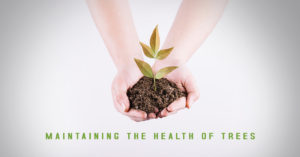
Tree Pruning Services in India

When Does Your Tree Need Professional Care?

How much time do you spend with the trees on your premises can be clear if you can observe the health requirements of your trees? Besides air, water, sunlight, and nutrition from the soil, trees need love and care from their owners to live healthily. Health check-up from professional plant health care services is further advantageous to maintain trees in a healthy condition. The urban tree experts vigilantly assess the current health condition of your trees and not only guide you with necessary measures required to improve the tree from any suffering but also do the needful treatment necessary for the tree. Sometimes the owner of trees is unsure whether his tree requires an appointment with certified arboriculture consultancy or not. Spending quality time with your trees enables you to point out even the slightest damage to your tree or any type of unhealthy signs that your tree is displaying which will help you to decide the right time to find a contact of certified arborist.  Some of the signs of an unhealthy tree requiring professional care that you can easily observe are:

Leaves: The first sign of health issues in a tree are displayed by its leaves. Discoloured leaves, deformed leaves, leaves with spots and holes can be easily noticed even by a layman. Furthermore, if you observe that a tree is unusually losing its leaves, then it is time to take advice from an ISA Certified Arborist in Mumbai.

Branches: Leafless branches are one indication of an ill tree besides branches shaping too low. Additionally, if the tree branches are falling without any major reason like a storm or heavy winds then a tree company in Mumbai can help you.

Barks: Cracks in the bark indicate the need for tree risk assessment by a professional tree arborist in Mumbai.

Roots: Waterlogged roots certainly damage a tree. Mushrooms at the base of the tree immediately let you know that the tree is unwell.

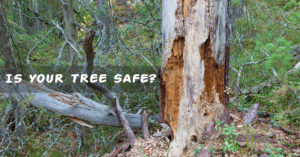
Trunk: The trunk is another major indication of a tree’s health status. Swelling, cavities or holes, unusual softness, etc. indicate that the tree is in trouble.

When the above signs are observed in trees, it is wise to call an arborist in Mumbai because delaying the appointment with the arborist Mumbai can turn the situation worse for the tree as well as life and property around. A sick tree can infect other plantations in the near vicinity and a dying tree can cause damage to men and materials by falling. Prompt action must be taken under the guidance of tree health care services to save the tree wherever possible, else to save life and property around the tree by removing the dying tree.
Fun Facts About Trees That Everyone Should Know

Fun Facts About Trees That Everyone Should KnowThe importance of trees in our lives cannot be emphasized enough. Since childhood, we are taught about their importance and that they give us food, shelter and life to wildlife. Other most crucial job that the trees do is to clear out the carbon dioxide from the atmosphere and release more oxygen. They are a beautiful creation of god and it is worth studying them in great detail. The fun facts below should be known to everyone, even those who do not have any arboriculture knowledge.

  1. Trees don’t die of old age:
    As per the data collected so far, it has been observed that the trees are the oldest living organisms on this earth. They don’t die if they grow really old. There are trees which are thousands of years old and still surviving! Organisations across the world are maintaining databases for tracking the age of the trees. Old trees are now preserved in most areas, thanks to environmental awareness. Tree specialist in India can help you in identifying the age of the tree.
  2. They need a lot of water, just like humans!
    Trees drink plenty of water every day. They can extract even hundred gallons per day from the ground below. Where does all this water go? The trees release it in the form of oxygen and water vapours. This whole process of consumption and release is dependent on various factors like type of the tree, location and environmental conditions.
  3. If trees and shrubs are placed at the right position in your home, then you can save up to 25% of your total electricity bills. They provide shade and can keep the home so cool that you wouldn’t require an air conditioner. A certified arborist in India can help you identify which location would be ideal.
  4. There are ‘moon trees’ on earth which were grown from about 500 seeds which were taken for orbiting the moon by Apollo 14 mission! That was in the year 1971. The seeds did not land on the moon though.
  5. Trees communicate with each other, especially when there is an external attack. It has been observed that when insects start their attack on the tree, it releases a chemical in the leaves for defence purposes. It also informs about the attack to other trees so that they can be prepared as well. It is good to know since tree safety is important to all of us!
  6. Pollens are shed by male pine cones and with the help of wind, those pollen reach the female pines cones where the pollination happens.
  7. Trees help in lowering the overall air temperature by evaporating the water.
  8. They also do the job of improving the quality of water for us. They slow down the rainwater going into the ground and save the aquifers.
  9. If you walk in the woods and get lost, trees can give you some direction! The moss and thick rings are more on the northern side.
  10. Different parts of the tree grow in different seasons. The tree doesn’t grow altogether.

How to Know if the Tree can be Saved or Not?


Trees and plants often catch diseases or gets infected. Identifying that the tree is sick is just the first step in tree healthcare. The next step is to take a remedial action. For that, you must first know whether it is worth spending time, effort and resources in saving the tree or not. Depending upon the ongoing season, the health of the tree can vary. Changing seasons always leave some effects on the trees.

The answer to whether the tree can be saved or not is not always straightforward. The judgement varies on a lot of factors. Most importantly, you should also be aware of the decline process of the tree. If the decline or decay has just started, then chances of saving the tree are pretty high. But if the tree has been sick from an year or longer than that, then saving it can be a very tough task. Even those trees which have a dead top are very difficult to save. This statement cannot be generalised for all sorts of trees. The reason for decline or decay plays a very important role here.

As said for all the other diseases for every creature on this earth, prevention is better than cure. It is important to keep the trees healthy and maintain their good health all through year, specially during changing seasons. If any signs are showing up, then it is important to follow up regularly and conducting repeat checks. Sometimes, correct usage of tree pruning techniques can also save from spreading disease.

It should be accepted that the tree is always disturbed by regular fungi and some varieties of insects during the summer season. This kind of disturbance to the health of the tree is nothing to worry about because the trees have their own healing mechanisms and immunity against these regular insects and fungi which comes up during summers. 

An example of such a problem is apple scab. This disease or infection is caught by apple trees or other fruit bearing trees. Such an issue is commonly caused in the spring season and it does not harm the overall health of the tree badly, so this can be ignored in some cases if the intensity is too high. But if this issue is coming up every year, then this should also be treated.

The colour of the leaves is also an indication of the health. Green leaves are a sign of good health but if they are having off-coloured leaves, then it is a matter of concern. In case of pine trees, if the needles are not looking like other needles, it could be a problem as well. Note that yellow leaves can be fixed.

Another concerning problem are the small dead branches or limbs. If the reason for dead limbs is insects, then it can be fixed. If the reason is something else, then it might not be fixable.

Arboriculture training includes identification and handling of such issues. You can also hire the services of a certified arborist in India if you need help in looking after your trees and maintaining their good quality of health.

Quick Steps to Evaluate and Monitor the Health of the Trees

Maintaining good health for the tree is very tricky at times. Just like any human, trees also need daily care and attention. Any changes in the tree is a sign of something- either good growth or bad health. In case there is any issue with the tree, it should be handled on priority basis before the disease or the issue grows bigger and things become impossible to fix. Practicing tree healthcare can be less tricky if the sick tree is identified early in the stages. The methods for tree risk assessment can be as simple as just visual inspection and monitoring. 

When you visually inspect a tree, you need to concentrate on all the parts, including the roots, leaves, branches and the trunk. There are various aspects that needs to be inspected for the purpose of tree risk assessment.

It is a great idea to start from the bottom of the tree. If you find any issues at the bottom part of the tree, there is a high possibility that the issue will be there in rest of the tree as well. Not just the presence, but also the intensity of the issue can be pretty alarming too.


Below you can find four ways to identify a sick tree and save it from getting into deeper problems:

  1. As stated earlier, concentrating on the bottom of the tree is the most important thing and the method to do so is taught in the tree care training programs. You should try to see if there are any soft spots or if there is a sign of decay anywhere in the roots. If there is a dodgy area that you can spot, better take a picture and inspect again in few days.
  2. Next level is to inspect the collar part. It is the spot where the roots and the trunk meet on the ground. For inspecting the collar, you might need to temporarily remove the grass or land-cover which might be obstructing the view. Make sure that the piece of the bark is not missing from anywhere. Even if the piece of the bark is about to fall or is broken, then also it is a problem. If there are cracks in the trunk, you can expect a problem coming your way.
  3. Going higher up, next in line is the trunk. Mostly, the trunks are never very smooth and even. You need to find deeper cracks which are longer in length. If they are present, it implies that the tree is weak structurally. You can take help from a certified arborist in Mumbai to know the intensity of the decay.
  4. Last step is to concentrate on the crown of the tree. You need to make sure that there are no limbs which are missing the bark or any hanging or broken branches. Even if there are any bare branches, then it could be a sign of a problem.

These were some quick and easy steps, but if you think they are overwhelming for you, then you can avail the services of an arborist in India to inspect the trees.

About Treecotech

‘TREECOTECH’ – a first-of-its-kind organisation in India dedicated to provide full scale Arboriculture Consultancy services catering to all government, semi-government, private entities like corporates, architects, project management consultants etc.

+91 99204 86396

Contact Form

    Instagram Feed