Importance of Hiring a Certified Arborist

Importance of Hiring a Certified ArboristServicing the tree is considered as an easy task by most people and they get confident about managing it on their own. Even those people who do not possess arboriculture training try to maintain the trees all by themselves, maybe because it seems like it is the basic gardening and landscaping work to do. But in reality, there is much more to it and is not as easy as it might seem in the first place. Arboriculture knowledge is really helpful to decide on when is the right time for maintenance and how it should be done.

Trees can be difficult to maintain, especially when they grow long- almost same or higher than the height of the building. Their roots can spread in a much wider area under the ground, which can make things a bit tricky. Taking care of such trees requires help from a certified arborist in India.

The question is why would you want to hire the services from an arboriculture consultancy in India? Why your investment is worth the return? The answer is that the value of trees should not be measured quantitatively but researchers have attempted to do it. The observations are that almost seven percent of the value of the property is determined by the kind of health of the trees in that property. In fact, the overall landscape maintenance can contribute up to 15% to the value of the property. Trees obviously occupies a major share in the whole landscape.

If you are really concerned about appraising the value of the property, you should not think twice before hiring the services of a certified arborist in India. Take this as a long-term investment for housing. The whole planning starts from design of the landscape to making the walkways or drive-ways nice and lively. If these areas are beautifully developed, your property is bound to get the attention even from any passer-by. Therefore, maintenance of the trees is like creating an asset. On the other hand, if tree care solutions are not implemented, then the sight of the property won’t be pleasant at all.

A certified arborist in India receive their certificate only if they meet the requirements by the certifying authority, after receiving mandatory arboriculture training and testing of their skills and abilities.

The certification body in India makes sure that the arborists have adequate knowledge to be able to do the process of planning and development of trees. They also have a list of tree specialists in India and are in contact with the consultancies where these specialists work.

Certified arborist in India knows very well how to manage the trees and how to check the health of the tree. The observation of the roots and leaves requires technical knowledge. When this knowledge is combined with the experience, the results are beneficial for the trees which are a blessing to our lives. There is no good reason for not hiring the services of a certified arborist.
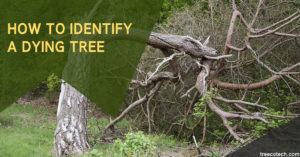
How to Identify a Dying Tree

Arboriculture training in Mumbai

Maintenance of trees is not an easy task to do. Trees, just like humans, needs regular attention and care. If they are sick, there are signs that you can read to identify their sickness. Having Arboriculture training can surely help in reading these signs since planning and development of trees is way too hard for naïve people. Even though you don’t have enough knowledge about the maintenance of trees, you can still try to find out whether the tree is dying by looking out for the following signs:

  1. Observing the trunk:
    Normally, when a tree is dying, it develops some vertical cracks in the trunk. You might also notice that the bark is missing from some areas. It could also be presence of dead bark or removed portion of it. There could be presence of Cankers too. These factors are visible from naked eye but they are easier to identify by a certified arborist in India. Other signs of trunk can be seen only if you go close and scratch it. If the inner layer of the bark has turned brown, it means that the tree is already almost dead. 
  2. Signs from the branches:
    Branches lose hold of the leaves during an incorrect season if the tree is dying. If the leaves are falling in autumn, it should be okay but if they falling out at an abnormal pace and time, then it is not a good sign. Make sure that the measures for tree safety are in place so that there is no external danger for the trees. Other signs that you can look out for are presence of dead leaves on the branches. The joints that connect the tree with the branches might turn weak and are prone to breaking with a little effort. In the growing season like spring, if the leaves are still brown in colour and brittle, then that could also be a sign of a dying tree. 
  3. Signs from the roots:
    If the roots of the tree are damaged, it will affect the whole tree and it might lean on some specific side. You will also be able to notice some little branches coming out from the base. If  you can see slimy roots, then it is also a nearly sure sign of tree decay. In the Arboriculture training programmes, the knowledge about these kinds of signs is also given.

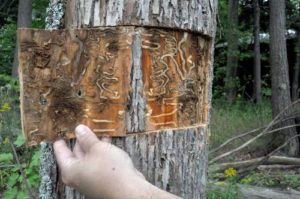
There are other generic things like presence of fungus which can mean that the tree is rotting from the inside. In fact, not just fungus but creatures like bark beetles, ants or other insects generally thrive on dying trees. Any tree specialist in India can read these signs very quickly, just by looking at the tree.

Understanding of these signs can help you to save the tree from dying in some cases or in its timely removal before it causes any damage to the property or people nearby. A Treecotech Arboriculture specialist can help in noticing such signs.

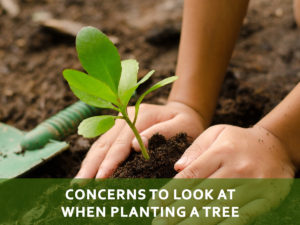
Concerns to Look at When Planting a Tree


The decision of planting a tree can be a quick one but when it comes to implementation, there are a lot of things that need to be looked at. The major factors that can affect your decision to plant a tree are as below:
Location:
Due to space limitations, one of the major concerns in today’s time is the tree safety. You need to find a place which will be a secure one for the tree and where the chances of damage are minimal. Trees are really helpful to cool down the space around them. They can provide shade which keeps the house cool, provided they are well placed as per the direction of the sunlight. This can lead to saving the cost of energy consumption. Generally, it would be a good idea to plant a deciduous tree towards the south side of your home, but then you have to see how your home is built and how the sunlight plays around it. Deciduous trees shed their leaves in winters, which will allow some sun in your home and prevent it from getting damp and cold. Even the wind direction can affect the trees.

Legal issues:
Apart from the location of the tree, you might also need to look out whether you will require BMC tree permission. If the tree is going to grow in the public property, you might need to get permissions from BMC who also have a role to play in planning and development of trees.

Aesthetics:
Everyone has their own choices of trees in terms of aesthetics. The tree has to match the landscape as well. Some people prefer having huge trees like oak and others might prefer small ones which can easily be pruned. There are trees which can have flowers as well. Contact Treecotech Arboriculture specialist to know about what options can you have. They will help you in understanding how much time it takes to grow them as well.

Synchronisation with local environment:
Note that when you plant a tree, it is not just about growing it as a stand-alone entity. It will communicate with, and affect plants and trees nearby it. Other elements of the ecosystem like squirrels, birds and other creatures will also be looking out for it. If you are aware of good tree care solutions, you will be able to provide a healthy home to these creatures as well. It is not just the creatures, but even the water quality is affected by tree plantation.

Safety Measures:
Apart from ensuring the tree safety, you should also ensure that the safety of humans living in that area is maintained. The tree should not obstruct any entry or exit paths. Growing plants at the entrance can look a bit obstructive for guests. Also, you need to see how high or low branches of the tree will be. If a lot of people walk nearby that area, the height of the tree will matter as well.
Before planting, it will be a great idea to get a consultation from an Arboriculture consultancy in India like Treecotech.


Quick Steps to Evaluate and Monitor the Health of the Trees

Maintaining good health for the tree is very tricky at times. Just like any human, trees also need daily care and attention. Any changes in the tree is a sign of something- either good growth or bad health. In case there is any issue with the tree, it should be handled on priority basis before the disease or the issue grows bigger and things become impossible to fix. Practicing tree healthcare can be less tricky if the sick tree is identified early in the stages. The methods for tree risk assessment can be as simple as just visual inspection and monitoring. 

When you visually inspect a tree, you need to concentrate on all the parts, including the roots, leaves, branches and the trunk. There are various aspects that needs to be inspected for the purpose of tree risk assessment.

It is a great idea to start from the bottom of the tree. If you find any issues at the bottom part of the tree, there is a high possibility that the issue will be there in rest of the tree as well. Not just the presence, but also the intensity of the issue can be pretty alarming too.


Below you can find four ways to identify a sick tree and save it from getting into deeper problems:

  1. As stated earlier, concentrating on the bottom of the tree is the most important thing and the method to do so is taught in the tree care training programs. You should try to see if there are any soft spots or if there is a sign of decay anywhere in the roots. If there is a dodgy area that you can spot, better take a picture and inspect again in few days.
  2. Next level is to inspect the collar part. It is the spot where the roots and the trunk meet on the ground. For inspecting the collar, you might need to temporarily remove the grass or land-cover which might be obstructing the view. Make sure that the piece of the bark is not missing from anywhere. Even if the piece of the bark is about to fall or is broken, then also it is a problem. If there are cracks in the trunk, you can expect a problem coming your way.
  3. Going higher up, next in line is the trunk. Mostly, the trunks are never very smooth and even. You need to find deeper cracks which are longer in length. If they are present, it implies that the tree is weak structurally. You can take help from a certified arborist in Mumbai to know the intensity of the decay.
  4. Last step is to concentrate on the crown of the tree. You need to make sure that there are no limbs which are missing the bark or any hanging or broken branches. Even if there are any bare branches, then it could be a sign of a problem.

These were some quick and easy steps, but if you think they are overwhelming for you, then you can avail the services of an arborist in India to inspect the trees.

Prune Trees

Why and When You Should Prune the Trees

Causes of Tree Pruning in Winters

tree pruning techniquesPruning the trees is important part of the maintenance. If done properly and carefully, it can be a healthy thing for the trees as well. There are a plenty of tree pruning techniques and they should be used depending upon the kind of tree it is.
Generally, the pruning is done for following purposes:

  1. Removing the deadwood from the way or from the tree itself.
  2. Aesthetic purposes or giving a shape to the tree so that it can grow in a specific direction.
  3. Removing the hazards which can be for humans as well as other trees/plants nearby
  4. To initiate new growth
  5. Sometimes, the trees needs pruning after the storm or very windy weather.
  6. To action something found after tree decay detection.

When exactly the right time to prune the trees is independent on the conditions above. The purpose of pruning has to be determined first. If the purpose is just to remove the deadwood or little bit of tidy-up, then it can be done almost any time in any season.

Pruning in fall:

Pruning should be done during fall when ret-structuring is required. This is because during or just after the fall, the structure of the tree is clearly visible due to absence of the leaves. This is also called as dormant pruning. It’s affects can also be seen until the following year. When the trees are pruned at this time, for some kinds of trees, it results in much better growth. It requires Safe Climbing and Working in Trees.

Pruning in Winters:

Pruning in dead cold winters might not be a very good idea because the cut open area of the tree might dry out very soon. However, for some trees like the oak, pruning can be done if it has caught a disease like Oak Wilt. Any major pruning can be avoided in winters, specially is the tree is going through dryness itself.

Pruning in Spring:

Spring is the best season to prune the trees which bears the fruits. Even for other trees, it is a good time since at this time, the tree is in a mode to grow, recover and flourish. For some of the trees like Magnolia or redbud, it is better to wait for their blooms to drop before you prune them.

Pruning in summers:

Summer pruning is mostly meant to remove the deadwood and dried leaves which can catch fire if not cleaned. Too much heat can also cause dryness for the tree.

Apart from usual seasons, sometimes the trees needs pruning when there is a damage due to storm or construction. In such situations, the timing becomes secondary and the ‘need’ takes the priority. Knowledge of managing the tree is a must here. Arboriculture training can help you to identify the need for pruning at the right time, thus giving a healthy life to the trees. You can also go through the reports for pruning & removal applications to understand the process and its effects better.

Tips to Help You Identify When the Tree is Getting Sick

Is Your Tree Sick?

Having trees in the backyard or premises of the home is a great thing to have. But maintaining them can be a big task, specially if you are not aware of how to check the health of the tree. Tree decay detection is a skill, but there are some useful suggestions and tips which can help you even if you don’t have knowledge like a professional gardener does. Some of them are listed below:

Know your trees:

First thing to do is to have a read about what all trees you have got. Once you are aware of the proper names of the trees, it will help you to look up for useful information about them. You should how does the healthier version of the those trees look like. You might think that having leaves green is a sign of a good health, but there could be plenty of other things to check.
Other ways to stay informed is to read the cards that come along when you buy a new plant. There is plenty of information mentioned on those tags and they should be saved for referring again. Sometimes even a picture on those tags can tell you how that tree should look like.
You can also learn more or gather information by going for an Arboriculture training. That is like a professional level training which will help you in getting the skills of manage wide variety of trees.

Being aware about the diseases:

As the urbanization is increasing, trees are finding it hard to cope up with the changes in environment for them. Also, we have started growing them in places which might not be meant for them or where the environment is not in their best favour. There are plan health care services available which can provide Species selection and Planting advisory so that you can grow them in suitable surrounding. But being aware about common issues which the plants and trees can generally catch will be very helpful.
There are some diseases which might make the tree look really sick, but they could just be cosmetic issues and might not affect the health of the tree from inside. On the contrary, there could some diseases which shows less signs but could prove to be very damaging for the health of the tree.
Also, there are certain seasonal issues which should be checked for.

Inspection:

Needless to say, regular and timely inspection of the trees can save the tree’s life. If some of the signs can be read in early stages, the treatment can be given soon and prevent the disease from growing or spreading. Some things that you should look out for are:
Limbs of trees to make sure they are not broken or show sign of disease
Shape of the leaves- they shouldn’t be curled up or damaged
Presence of mushrooms
Verification of the roots
Observe the bigger picture- inspect the tree overall to see if something looks unusual.
These simple techniques can help you detect the diseases early and can give you a chance to get the trees back to healthy status again.

About Treecotech

‘TREECOTECH’ – a first-of-its-kind organisation in India dedicated to provide full scale Arboriculture Consultancy services catering to all government, semi-government, private entities like corporates, architects, project management consultants etc.

+91 99204 86396

Contact Form

    Instagram Feed