10 Plants in Vogue in the Year 2020

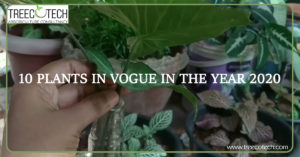
10 Plants in Vogue in the Year 2020When you are on the lookout of gracing your property with plants, tree planning consultancy services are the right contact to guide you for species selection and planting advisory. Meanwhile, you approach a tree development consultancy in Mumbai, here we have some information regarding the trending plant choices in the year 2020.

In the year 2020, the choice of indoor and outdoor plants is chiefly affected by the shift in the consciousness of the people towards the environment. Some of the popular types of plants which are best for decorating your premises this year are:

  1. Wildlife attracting plants: Many plants attract bees, butterflies, and similar other wildlife. Such plants are being preferred in 2020 because these species help in pollination and thus become a cause of multiplying the plants without much effort. More plants mean pacing up the steps towards green Earth. 
  2. Native plants: The plants that naturally occur in your area are called native plants. The recent trend is to have native plants on your premises. Such plants beautify properties at their best because they can grow well and survive for long in the environmental conditions of the area to which they belong.
  3. Small Species: People in urban cities usually face a problem of lack of space. They try to fit every luxury and necessity in limited space. Arranging dwarf plant varieties on their premises is one such step. It allows them to relish the natural beauty of the plants without wasting much space.
  4. Organic food-bearing plants: Globally, the trend is not only being conscious about the environment but also being health conscious for achieving which people plant food-bearing plants in their premises. Plants bearing fruits, vegetables or edible flowers can be planted this year depending on individual choices. These plants have a double benefit, one is adding aesthetic value and the other is providing organic food.
  5. Moving back in time: Since people are becoming more environment-friendly day by day, they are adopting the practice re-wilding their gardens and trying to establish an untouched landscape. Re-wilding gardens mean to reduce the use of pesticides, herbicides, and tree pruning techniques. Planting more of native species and encouraging beneficial insects are other steps in the process of re-wilding gardens. 
  6. Succulents: Succulents and cacti have become the choice of the people either because of their low maintenance or artistic growth patterns.
  7. Floral Plants: Plants which feature both flowers and foliage have always been popular and so they cannot be missed this year too.
  8. Uniqueness is attractive: Many consumers prefer unique over common. To stand out of the line, consumers prefer dark plants i.e. the plants which have red, purple or black leaves, for example, Black Raven, Black Diamond or red Aglaonema. This novel touch eliminates the monotony of green as experienced by many consumers. 
  9. Greens: Even though many consumers prefer unique, greens will never go out of fashion. Grow leafy greens to follow the trend this year.
  10. User-friendly plants: Plants that are user-friendly even at the time of natural disasters are preferred because people take every step cautiously for efficiently handling any unseen and unexpected challenge. Trees are the second choice of residential owners as trees can damage property or men if planted around the residential premises.

Found a Hazardous Tree? Contact Urban Tree Experts for its Removal

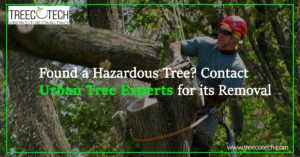
A tree is termed as hazardous when it can pose danger to men and materials around them. This danger could be minor injuries, damage to property or even death of living beings around the hazardous tree. A tree becomes dangerous because of the defects in it which leads to its breakage or fall. In the event of the fall, the broken limbs, fallen branches or tree trunk can hurt men, animals, and materials around causing loss of life and property. To avoid such losses, it is very essential to identify a hazardous tree in your near vicinity or within your property. You may avoid a hazardous tree in the jungle but avoiding one in the city is not a wise idea. Spot a hazardous tree soon and hire a tree arborist in Mumbai to guide you on how to proceed. For identifying a hazardous tree, the following points can help you:
• Branches: If the branches of a tree fall in minor wind or storm or if the branches can be easily broken then it is a sign of a hazardous tree.
• Dead tree: Merely the sight of the tree will itself tell you that the tree is dead. It may appear black-brown, dull and bare (without leaves). The decaying trunk is also indicative of a dead tree.
• Forked trunks: If the tree trunk is bifurcated into two similar branches it is called forked trunk. Forked trunks will produce a hazardous tree especially when the fork is growing sideways or when it is narrow as narrow forks are prone to infections.
• Root decay signs: Growing mushrooms and too many insects on the tree are signs of decaying root. If you find them, immediately get appointment with arboriculture expert to seek the right advice.
• Leaves: A tree that does not bear dense canopy and new fresh leaves may be dying and thus can prove to be hazardous if not saved in time.
If you are still doubtful about a particular tree around you that whether it is hazardous or not then call for a certified arborist in Mumbai. A tree arborist in Mumbai can skillfully identify a hazardous tree and will brief you about tree pruning techniques as may be required to apply on the tree. The arboriculture consultancy in Mumbai can do the task for you. It is essential not to try tree removal on your own because it is a big task and needs special knowledge, tools, and expertise which only a certified arborist service in Mumbai can offer. The plant health care services remove only the dead and hazardous trees and if a tree can be saved then the tree health care services will guide you for safe tree retention and protection strategies following which you may be able to save an unhealthy tree. Thus, to save yourself from a hazardous tree or to save an unhealthy tree, it is best to take the advice of tree care experts in Mumbai.

Role of Trees in Physical and Mental Health of Humans

Role of Trees in Physical and Mental Health of HumansThere is lots of talk and awareness about the mental health these days. Mental health experts are coming up with lots of things for people to try so that the global issues of depression and anxiety can be addressed. New concepts like use of organic food, digital detoxification etc. are becoming increasingly popular with the rise in the awareness about the impact of technological advancement on our daily lives. People are now going back to the roots and are making connections with our mother nature. Spa retreats, organic living, turning vegan are some of the steps that people are taking for that purpose. Even the housing projects are considering the planning and development of trees as an important step.

In such times, it is important to understand what role do trees play in making us happier? What effect do they have on our mental wellbeing? Trees not only gives us oxygen, clean water, air, food, shelter etc. but they also make us happier.

There have been studies which proves that those people who live in green areas lead a happier and healthier life. Trees can:

  • Lower down the blood pressure, possibly by releasing more oxygen and by improving the air quality.
  • Fastens up the reaction time of people because they give rise to the level of attentiveness.
  • Increase the productivity of employees in workplaces.
  •  Have a positive effect on overall wellbeing of people.
  • Have an impact on the perception of the space around.
  • Help people recover faster from treatment or surgery.
  • Act as a catalyst in work performance and increase the overall job satisfaction.

It is not just job satisfaction, but trees can also increase overall satisfaction levels regarding life in general. The levels of satisfaction are comparable to that of having a job or having a partner. There have been lots of indicators and thesis which have proved that trees have a very positive impact on the lives of people. A tree specialist in India can tell you about their experience with people who might have realised the positive effects of having trees around themselves. The levels of satisfaction and happiness can ultimately even reduce the overall crime rates. In fact, the number of diseases also reduced where the greenery is abundant. This is possibly because many of the diseases are caused by stress.

Arboriculture training can teach you a lot about which trees to grow in which location so that people in that area can get the maximum benefits. Everyone should consider planting some trees in the vicinity of their property. This will be good for the whole community. Trees always take less and give back way more than they take from us. They are good, beautiful, helpful and lifeline for us humans, which is why they should be respected and nurtured. Call up a certified arborist in India today to know more about what can you do to get the maximum from these beautiful creations of nature.

Quick Steps to Evaluate and Monitor the Health of the Trees

Maintaining good health for the tree is very tricky at times. Just like any human, trees also need daily care and attention. Any changes in the tree is a sign of something- either good growth or bad health. In case there is any issue with the tree, it should be handled on priority basis before the disease or the issue grows bigger and things become impossible to fix. Practicing tree healthcare can be less tricky if the sick tree is identified early in the stages. The methods for tree risk assessment can be as simple as just visual inspection and monitoring. 

When you visually inspect a tree, you need to concentrate on all the parts, including the roots, leaves, branches and the trunk. There are various aspects that needs to be inspected for the purpose of tree risk assessment.

It is a great idea to start from the bottom of the tree. If you find any issues at the bottom part of the tree, there is a high possibility that the issue will be there in rest of the tree as well. Not just the presence, but also the intensity of the issue can be pretty alarming too.


Below you can find four ways to identify a sick tree and save it from getting into deeper problems:

  1. As stated earlier, concentrating on the bottom of the tree is the most important thing and the method to do so is taught in the tree care training programs. You should try to see if there are any soft spots or if there is a sign of decay anywhere in the roots. If there is a dodgy area that you can spot, better take a picture and inspect again in few days.
  2. Next level is to inspect the collar part. It is the spot where the roots and the trunk meet on the ground. For inspecting the collar, you might need to temporarily remove the grass or land-cover which might be obstructing the view. Make sure that the piece of the bark is not missing from anywhere. Even if the piece of the bark is about to fall or is broken, then also it is a problem. If there are cracks in the trunk, you can expect a problem coming your way.
  3. Going higher up, next in line is the trunk. Mostly, the trunks are never very smooth and even. You need to find deeper cracks which are longer in length. If they are present, it implies that the tree is weak structurally. You can take help from a certified arborist in Mumbai to know the intensity of the decay.
  4. Last step is to concentrate on the crown of the tree. You need to make sure that there are no limbs which are missing the bark or any hanging or broken branches. Even if there are any bare branches, then it could be a sign of a problem.

These were some quick and easy steps, but if you think they are overwhelming for you, then you can avail the services of an arborist in India to inspect the trees.

Health Tree Community

Why should we Have Lots of Trees in our Community?

Reasons Of Having Trees In Our Community

Trees CommunityHaving wide variety of trees in the neighborhood seems like a great idea, but why really? There are certain obvious advantages that can immediately come to the mind like improving the aesthetics of the place (by the use of creative tree pruning techniques), or improving the air quality of the place. But apart from these, there are lot many other benefits that the trees provide- on a broader as well as more detailed levels. Some of the reasons why we should have trees in Planning and Development are listed below:

  • Monetary benefits:

This might seem strange at the first thought, but that’s true! Those homes which have more trees in their backyard or those streets where the number of trees are more- sell for more money as compared to the homes where the presence of trees in considerably less. Homes located on tree-lined streets sells faster as well. The reasons for these could be just the mental effects of trees on humans, or could be that some people might just prefer to sit in the shade of the tree and save the cost of air conditioning.

This not only applies to homes, but even those businesses which have plenty of trees around them, flourish better since people tend to spend more time in such surroundings. This is why, the Tree planning consultancy services gives the advice of having more trees.

  • Environmental benefits:

We always knew that trees do absorb carbon dioxide and release oxygen for us to breathe. But, it is great to know that they also absorb pollutants like nitrogen oxide, dust particles, ammonia, sulphur dioxide etc. They even protect us by absorbing the storm water and holding up the soil. They not only help us in living in a good habitat, but also serve as a home for birds, many varieties of insects and some animals as well. That provides us enough reasons to adopt safe tree retention and protection strategies.

  • Health benefits:

Apart from reducing the pollution, they also provide a cool shade for people to walk on the streets and protect themselves from the harmful UV rays. Presence of large number of trees creates a social space where children play, adults spent time talking and everyone improves there mental health. It can lead to reduction in blood pressure as well. It is also a well known fact that patients recover fast if they have access to a view with lots of trees and plants.

  • Social Benefits:

Trees in the backyard can give privacy to people, by blocking the views from unwanted surroundings. In a way, they also reduce noise pollution.

You can learn about more benefits by going through arboriculture training. The training will also help you to take care of the trees already existing in your locality. You can even get an arboriculture impact assessment done if you are considering the growth of trees in your area. Sharing this information in local community can lead to creation of nice neighborhoods!

Urbanization Affecting

How is Urbanization Affecting the Health of the Trees?

Urbanization Affecting the Health of the TreesIn a city like Mumbai, construction and renovation is an ongoing activity. City wide, upgrades are always going on and new housing societies are always under construction. Making way for new housing societies is important to cater to the needs of growing population, all this has a major impact on the trees and greenery around the localities where construction is done. There is some obvious damage to the trees which cannot even be ignored. But there are lot of other things that can be done to avoid the damage and let the trees survive along with the urbanization. Trees in planning and development suffer the most in different ways:

  1. Construction activities damage the health of the trees by giving them exposure to toxic substances. Some of the activities demands the trees to be removed altogether, for example building additions or installation of new structure like a pool. Creating the foundations of the buildings and even creating large pavements or broadening the roads have a direct and deteriorating effect on the trees. These activities should be tree survey compliant, but mostly, they are not.
  2. The effect of all the construction and building activities can be seen visibly most of the times, but there is some internal damage as done. The soil gets affected internally which can cause slow decay of the trees. Some of the visible effects are damage to the bark which gets scraped, the branches gets broken due to presence of machinery on the site, the roots gets exposed because of digging activities and other issues like compaction. Tree decay detection is very important to do on the site of the construction and should be the responsibility of authority who is getting that construction done as well as a check my local Municipal board.
  3. The exposed branches can catch the infections and insects which can be dangerously harmful for the trees. When the trees are partially broken or when their roots are weaker, then it will make them more susceptible to complete breakage in times of storms or heavy rains. They lose the ability to have a strong hold on the ground and can break easily. Some of the things can be predicted and avoided if the arboriculture impact assessment is done prior to getting the construction started. A willingness to save the tree can save a lot of them. Sometimes the effects are not seen immediately but they come up over time.

How can we avoid the damages?

  • The waste or construction material should never be piled on the roots.
  • Safe Tree Retention & Protection Strategies should be adopted, like putting a fence near the trees so that no vehicles gets close to them.
  • The digging should be done away from the roots. If this is not possible, then cutting that part of the root is better than leaving it injured and exposed.
  • Instead of letting the vehicles damage the trees, we can use the tree pruning techniques to make way for the vehicles.

Careful evaluation of the site and doing the assessment can save lot of trees, even in this urban world.

About Treecotech

‘TREECOTECH’ – a first-of-its-kind organisation in India dedicated to provide full scale Arboriculture Consultancy services catering to all government, semi-government, private entities like corporates, architects, project management consultants etc.

+91 99204 86396

Contact Form

    Instagram Feed